

Floor Lamps
What is Floor Lamps
A floor lamp, in the realm of interior design, is much more than merely a source of illumination. It stands tall, not just in its physical form but as a piece that embodies both functionality and aesthetic appeal. Usually consisting of a base, a stem or body, and a light source at the top, floor lamps can feature a range of styles, materials, and finishes that cater to varying design needs and preferences.
Floor lamps offer versatility and convenience, functioning as task lighting, ambient lighting, or accent lighting depending on its design and placement within a space. Unlike fixed lighting, floor lamps can be easily moved to suit changes in layout or lighting needs, making them a favorite tool in the dynamic process of interior design. They are particularly useful in spaces lacking overhead lighting or where adding such fixtures would be impractical or too invasive.


Benefits of Floor Lamps
Ambient Lighting One of the primary advantages of floor lamps is their ambient lighting capabilities. While overhead fixtures emit direct light downward, floor lamps diffuse light upward and outward for an ambient glow that creates cozy environments perfect for relaxation or entertaining guests. This gentle illumination can make a room cozier while offering ambient illumination that enhances any retreat where you might find yourself relaxing or hosting guests for dinner parties.
Task Lighting Floor lamps offer more than ambient illumination; they also serve as effective task lighting sources, whether reading, sewing, or working on craft projects. A strategically placed floor lamp can provide focused illumination exactly where needed. Adjustable models with flexible necks or swivel heads provide even greater versatility so you can direct light precisely to meet your requirements.
Space-Saving Solution Floor lamps offer an efficient space-saving lighting solution in rooms where floor space is at a premium, such as small apartments, cozy reading nooks, or compact offices where every square inch counts. Unlike table lamps or bulky overhead fixtures, floor lamps occupy minimal surface area while still producing ample illumination – perfect for such spaces!
Decorative Accent Floor lamps make a versatile decorative statement in any space they light. Offering various styles, materials, and finishes ranging from sleek contemporary styles to vintage-inspired ornate ones, one will surely fit into the decor perfectly and add visual interest.
Why choose us
We support you in the design of your product and provide you with the best advice to enhance and structure your offer.
Choosing Blackwood means the possibility of selecting products from our catalogue, customizing our creations, or having your own designs manufactured in compliance with standards and confidentiality.
With over 20 years of international experience, Blackwood benefits from strong expertise and historical know-how, thanks to the integration of design and marketing skills for product development and design.
We always use natural wood and logs as materials, without any splicing or chemical processing. This ensures that our products are natural, environment-friendly, and of high quality. Give your home the best touch and atmosphere.
Types of Floor Lamps
Club Floor Lamps
Club floor lamps can be a great addition to any room. They are tall, freestanding lamps designed to provide ambient or task lighting . They are most commonly used in living rooms, bedrooms, and home offices. Club floor lamps are a popular choice if you want to add a modern touch to your home or office décor. They have a variety of shades, including drum, cone, or bell-shaped shades. Club floor lamps are also energy-efficient and eco-friendly, as they use LED bulbs that last longer and consume less energy than other bulbs.
Swing Arm Floor Lamps
Swing arm floor lamps, also known as adjustable arm floor lamps, are a type of lighting fixture that features a long arm that can be moved and adjusted to direct light in a specific direction. The design of these lamps allows the lamp head to be positioned close to a reading or working area while the lamp’s base remains stationary on the floor. They are a great option for reading nooks, home offices, or bedrooms, as they provide focused light in a specific area without taking up too much space. They are also useful for task lighting and can be directed towards a specific area like a workbench or desk. When purchasing a swing arm floor lamp, consider the height and reach of the arm. Make sure that the arm is long enough to reach your desired area and that the lamp head is at the right height to provide the best light for your needs.
Tripod Floor Lamps
Tripod floor lamps are a stylish and practical addition to any home or office. They are designed to stand on the floor and feature three legs for support. The design of tripod floor lamps is often minimalistic, with legs typically made of wood or metal, giving the lamp a unique and modern look. They are typically taller than other types of floor lamps, which makes them ideal for use as reading lamps.
Arched Floor Lamps
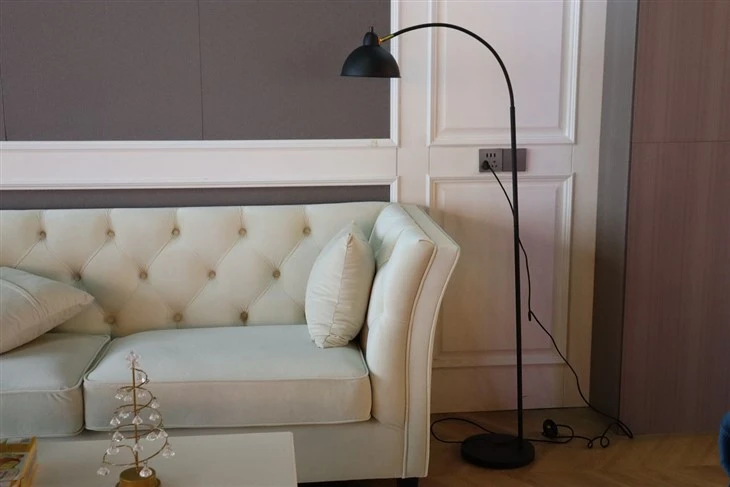
Arched floor lamps are a type of floor lamp that features a curved arm or “arch” that extends upward and over the lamp’s base. This design allows for the light to be directed in a specific area. The design of arched floor lamps is often sleek and modern. They can also come in a range of styles from contemporary to traditional, making them a versatile choice for any room in the house. Additionally, some arched floor lamps come with adjustable heads, allowing for even more control over the direction of light.
Pharmacy Floor Lamps
Pharmacy floor lamps are lighting fixtures specifically designed for use in pharmacies and other similar settings, as they provide a bright, focused light. They are tall, freestanding lamps that are usually placed on the floor. They feature a unique design that allows for easy and precise adjustments of the light beam. When talking about the design, pharmacy floor lamps often feature a long, narrow arm that extends out from the base, with a light at the end. This allows for easy light beam adjustment, as the arm can be easily repositioned to direct light exactly where it is needed.
Tower Floor Lamps
Moving down the list, we have the tower floor lamp. It is tall and slender and resembles a tower. Some tower floor lamps may have a more elaborate design with complex details and embellishments. They can be a great way to add height and interest to a space and can be used to complement or contrast with other furniture and décor. They can also be used to create a focal point in a room, drawing the eye and adding visual interest. Tower floor lamps are easy to install and can be adjusted to different heights. They can be used with different types of light bulbs, such as incandescent, LED, and CFL, and they can come with a dimmer switch option to adjust the brightness and create the desired ambiance.
Tree Floor Lamps
Tree floor lamps are very unique and resemble a tree. The design of a tree floor lamp adds a decorative touch to a room, making it a functional and stylish piece of décor. They usually have multiple branches that hold light bulbs, and sometimes these branches can be adjusted to direct light in different directions. The adjustable branches allow for multiple light sources in a room. You can use a tree floor lamp for tasks like reading, writing, or providing ambient lighting.
Torchiere Floor Lamp
The design of a torchiere lamp typically includes a bowl-shaped shade that directs light upward, casting a warm, diffused glow throughout a room. This design makes them ideal for use in living rooms, bedrooms, and other spaces where ambient lighting is desired. They are also popular as task lighting for reading. In terms of design, torchiere lamps can vary greatly. Some have a traditional look with ornate details and decorative elements, while others have a more modern, minimalist aesthetic. Additionally, torchiere lamps are energy-efficient and long-lasting, making them a cost-effective lighting solution.
What Size Floor Lamp Should I Get?
Regardless of the type of floor lamp you choose, the taller the light source, the more light will be spread throughout the room. Also, make sure to consider the other lighting sources in the room, as the ideal height for a floor lamp should match the height of any table lamps when they are placed on tables or legged furniture.
The drawback of a taller light source is that the bulb may reach or exceed your eye line, which many people find uncomfortably bright. To prevent this, consider aiming for a height of 67-69 inches. This should prevent you or any guests from seeing the bulb while standing or sitting. Additionally, shorter floor lamps provide more directed light for precision tasks and reading.
While it is important to consider the size of the lamp portion of a floor lamp, the base will likely be the largest constraint for space. Ambient and uplight floor lamps typically have the smallest bases and narrower shades; however, arc lamps have larger bases to counterbalance the extendable arm.
Other Considerations for Choosing a Floor Lamp
Cost
The cost of floor lamps can vary wildly, from low-cost, purely functional models to artistic or designer pieces that cost thousands of dollars. Generally, the more intricate the aesthetic or the more desirable the brand, the more expensive the piece will be. However, a fantastic design can serve as a work of art for the room it’s in.
Size
Size can vary quite a bit as well. Shaded or torchiere lamps, while tall, take up a narrow amount of space due to their vertical orientation, making them easy to fit into the surrounding space. Meanwhile, arc floor lamps take up more space due to their horizontal extension. It’s crucial to know how much space you have to fit a floor lamp into so you can be proactive about finding the right size.
Height
Height is another factor to consider. The higher the light source, the wider the spread of the light. This is great for ambient lighting but may be less ideal for task lighting where you want the light closer and more focused. Additionally, the light should be out of the way when you’re sitting next to it.
Choose Your Layer of Floor Light
Perhaps most importantly, you should pick a floor lamp based on what type of lighting the room needs. Look to the three key layers of light to decide: ambient, task, and accent. Maybe you want warm ambient lighting, which an array of shaded floor lamps can provide. Or, maybe you want direct illumination to light up your reading chair, in which case an arced reading lamp would be ideal. Or perhaps a torchiere to brighten up a corner and add some accent lighting. The style of light that the floor lamp emits should affect its placement as well, so make sure you get the right piece for the space.
Where Should I Place my Floor Lamp
Floor lamps can be positioned anywhere that doesn't disrupt the flow of traffic through the room.
In corners: Lights placed in the corner of the room will radiate inwards, adding additional ambient light whilst appearing to stretch the room in size.
By the side of chairs and sofas: Where a lampshade is used on the floor lamp, it should ideally have the base at eye level to avoid unnecessary glare.
Behind the TV Screen: Avoid glare when you're settling down to watch your favourite programs.
Floor Lamps in Specific Rooms
A living room floor lamp is the most popular use of a floor lamp. They are often used to brighten the room since the room is used frequently and may be occupied by multiple people. Floor lamps can be placed in the corners of the room or next to seating areas. Always think about how the light will be used by people. A reading lamp could be placed next to a frequently used chair. In a family room, floor lamps can provide atmosphere and ambiance.
In the dining room, a floor lamp will usually need to be in a corner. Foot traffic and sitting around a table are common behaviors, and the lamp needs to be out of the way. Since dining rooms sometimes have little additional room for activities beyond the table, a torchiere floor lamp is a good choice positioned out of the way in a corner. It will provide more general ambient light and help set the atmosphere.
In the bedroom, a floor lamp may provide one of two main functions. Either as an ambient light, in which the lamp may be the only light switched on, providing a soft, average light, or for use near a chair or bedside for reading. If reading in bed, a full spectrum floor lamp is a good choice next to the bedside, provided it clears your head and won't be in your way.
In an office, you likely are seeking general overall light, and most types of floor lamps will work for this. Since an office is usually a more formal working environment, you might opt for a more functional lamp, perhaps a torchiere or a reading lamp. Also, consider the placement of the lamp. If you are to use it to help you with your work, then it will need to be closer to the work surfaces.
Components of Floor Lamps
Lamp holder The base of a floor lamp is usually made of metal or plastic and is used to carry other components of the lamp and act as a support for the lamp. Its stability plays an important role in maintaining the balance and stability of the lamp. The stability of the lamp holder can be achieved by increasing the weight of the base or using anti-slip materials.
Light pole The lamp pole is the key component that connects the lamp holder to the lamp shade. It can be adjusted as needed to change the height of the floor lamp and the illumination angle of the light. Light poles are usually made of metal to ensure sufficient strength and durability.
Lampshade The lampshade is an important part of the floor lamp, which plays a role in controlling the light irradiation range and lighting effect. Different lampshade designs can produce different light effects. For example, translucent lampshades can create soft diffused light, while metal lampshades can create a localized light effect.
Light bulb The light bulb is the component that provides the light source, usually located inside the lampshade. Different types of light bulbs have different brightness, light color and energy consumption. Common light bulb types include incandescent light bulbs, fluorescent light bulbs, and LED light bulbs.
Wires and switches Wires and switches are key parts of powering up a floor lamp and controlling the light. The wires are often hidden inside the light pole to maintain a neat appearance. The switch is used to control the turning on and off of the light and can be installed on the lamp holder or the side of the lamp pole.
Things you Should Know When Using Floor Lamps
Pay attention to the placement location
Floor lamps are usually relatively tall lamps. In order to avoid accidents, we need to place them in a relatively open place. There should be enough space at the bottom of the floor lamp and should not be placed close to furniture or other decorative items that are too tall. In addition, when choosing a location, make sure that the power sockets are not too far apart to avoid unstable power supply lines.
Floor lamp lighting range
The lighting range of floor lamps will vary depending on the shape, height of the lamp, and the brightness of the light source. Therefore, when purchasing a floor lamp, you need to choose the right fixture based on the size of the room, its purpose, and your personal preferences. When in use, the floor lamp needs to be placed in a suitable position to obtain the best lighting effect.
Pay attention to quality and materials
The quality and materials of the floor lamp will directly affect its service life and lighting effect. Generally speaking, using a high-quality floor lamp can better protect your eyes and reduce energy consumption and maintenance costs. In addition, the appearance design and style of the floor lamp are also very important, and can be selected according to personal preferences and the decoration style of the room.
Pay attention to the maintenance of floor lamps
The light source of floor lamps is usually LED lights or bulbs, which need to be replaced regularly. In addition, the shell and lamp holder of the floor lamp also need to be cleaned regularly. When cleaning, you can use a soft cloth or vacuum cleaner. Never use corrosive cleaners as they may damage the fixture.
How to Choose the Right Floor Lamp
Consideration should be given to the size and dimensions of the room, as well as existing decor, furniture, and the overall design theme. The right style of floor lamp helps bring everything in the space together. When it comes to floor lamps, size matters. It’s important to consider the height of the room and the size of existing furniture. For example, a tripod or oversized floor lamp looks great in the right setting, but may make smaller rooms with lower ceilings feel more enclosed. Stylish, streamlined metal lampshades are perfect for modern spaces, while a more traditional setting may suit a more classic frame, such as an elegant wood or brass post floor lamp that would look beautiful with a tapered material shade. and spreads the light nicely around the space.
As well as providing practical illumination, floor lamps can be used to create a sense of cosiness and intimacy. A stylish floor lamp in the dining room will create a lovely warm ambience for eating and socialising. A floor lamp also can be a great way of adding some character to a dark or empty space. Use a striking, standalone floor lamp to make more of an awkward corner or an unloved area. Or to create a cosy chillout space, combine a classic upright floor lamp with a favourite armchair. And in the bedroom, combining a full-length mirror with a stylish floor lamp will help to reflect the ambient light and create a relaxing vibe. Tip: A semi-translucent silk or linen lampshade will create a softer, more diffused light.
1. Base
The base acts as the foundation of any floor lamp. Its primary role is to offer stability, preventing the lamp from easily tipping over.
Definition
The base forms the lowermost part of the floor lamp. Stability is its key function. This is crucial for maintaining the lamp's upright position.
Materials
Floor lamp bases come in various materials. Metals provide a sleek, modern look and are quite heavy, aiding in lamp stability. Wood adds a warm, natural touch to your space, bringing a sense of organic beauty. Plastic bases, meanwhile, offer versatility and are lightweight, suitable for less frequented areas of the home.
Design
The design of the base can significantly influence a lamp's overall look and its balance. Sleek designs fit well in minimalistic decor, whereas ornate bases can add a touch of elegance to a room. The design's impact on stability cannot be overstated; a wider base usually means a more stable lamp.
2. Pole or Tube
The pole or tube stands as the spine of a floor lamp, creating a bridge between the base and the lamp head.
Materials and Size
Materials: The choice of material for the pole can vary widely. Metal poles are popular for their durability and sleek finish, fitting seamlessly into modern decor. Wooden poles bring a rustic or Scandinavian touch to interiors, embodying warmth and nature. Each material introduces a distinct character to the floor lamp.
Size: The height of the pole directly influences the lamp's reach and area of illumination. Taller designs are suited for general lighting, while shorter poles may cater to focused tasks like reading. The versatility in pole size allows floor lamps to serve various purposes across different settings.
3. Lamp Head or Fixture
The lamp head or fixture is important for both the function and appearance of a floor lamp. It holds the light bulb and supports the lampshade.
Definition
The fixture is the uppermost component of the floor lamp. It's where illumination originates, and often, where the lampshade connects.
Types
Fixed Heads: These are stationary, directing light consistently in one direction. Ideal for accent lighting, they illuminate specific areas or objects.
Adjustable Heads: Offering versatility, these heads can be repositioned to change the light's direction. They're perfect for reading or tasks requiring focused light.
4. Lamp Shade
The lamp shade plays an important role in how floor lamps function and look, by controlling how light is spread out.
Purpose
A shade primarily softens the light, creating a comfortable ambiance. It minimizes glare, making spaces more inviting and easier on the eyes.
Materials and Shapes
Materials: Shades are made from a variety of materials, each affecting the light's quality. Fabric shades cast a soft, diffused light, ideal for living spaces. Paper shades offer a gentle glow, enhancing warmth and coziness. Metal shades focus light directly, suitable for tasks or highlighting areas.
Shapes: The shape of the shade also influences the lighting effect. Drum shades offer a contemporary look, casting light evenly above and below. Cone-shaped shades focus light downwards, perfect for reading. Bell shapes spread light for a softer, ambient effect.
Selection Tips
Choosing the right shade involves more than just aesthetics. Consider the room’s purpose.
For a study, a transparent or semi-opaque shade might be best, offering ample light without harshness. In a bedroom, a darker, more opaque shade creates a relaxed atmosphere. The shade's material and shape should align with the room's existing decor for cohesion.
5. Bulb
Choosing the right bulb is pivotal for optimizing a floor lamp's functionality and energy efficiency.
Types
LED Bulbs: Stand out for their efficiency and lifespan. They serve a wide range of lighting needs with variable brightness and color temperatures.
Halogen Bulbs: Provide bright, white light, closely mimicking natural daylight. Ideal for tasks requiring precision and clarity.
Fluorescent Tubes: Known for their energy-saving qualities and broad light coverage, suitable for general ambient lighting in larger spaces.
Incandescent Bulbs: Classic bulbs that produce a warm glow, enhancing cozy and intimate environments.
Energy Efficiency and Brightness
Energy efficiency varies significantly across bulb types. LED and fluorescent bulbs are great for saving energy and last longer, so you won't have to replace them as often. The choice of brightness, measured in lumens, should align with the room's purpose. A brighter light is preferable for reading or detailed tasks, whereas softer lighting suits general ambient needs.
6. Switch and Power Cord
Understanding the switch and power cord of a floor lamp enhances usability and safety.
Switch Types
Floor Switches: Activated by foot, these are convenient for lamps placed behind furniture or in hard-to-reach areas.
Pull Cords: Add a classic touch, allowing for easy on/off functionality with a simple
Certifications


Our Factory


FAQ
Q: Which floor lamps give the best light?
Q: Can you put a floor lamp next to a bed?
Q: What to look for when buying a floor lamp?
Q: Should floor lamps in a living room match?
Q: How tall should a floor lamp be next to a sofa?
Q: How tall should a living room floor lamp be?
Q: How many floor lamps should you have in a living room?
Q: How do you style a floor lamp in a bedroom?
Q: Where should a floor lamp be placed in a small living room?
Q: Should I put a floor lamp next to the TV?
Q: Do floor lamps save electricity?
Q: Can you put a floor lamp next to a table?
Q: How do you mix and match floor lamps?
Q: Should floor lamp be in the corner?
Q: How do I choose the right floor lamp for my home?
Q: What should I consider when choosing a floor lamp?
Q: How do I clean my floor lamp?
Q: How do I position my floor lamp for optimal lighting?
Q: Is it easy to install a floor lamp?
Q: Are floor lamps safe to use?
We're professional floor lamps manufacturers and suppliers in China, specialized in providing high quality products with low price. We warmly welcome you to buy discount floor lamps from our factory. For quotation, contact us now.
Balck Iron Cloth Floor Lamp, mid century modern floor lamp, giant retro floor lamp